
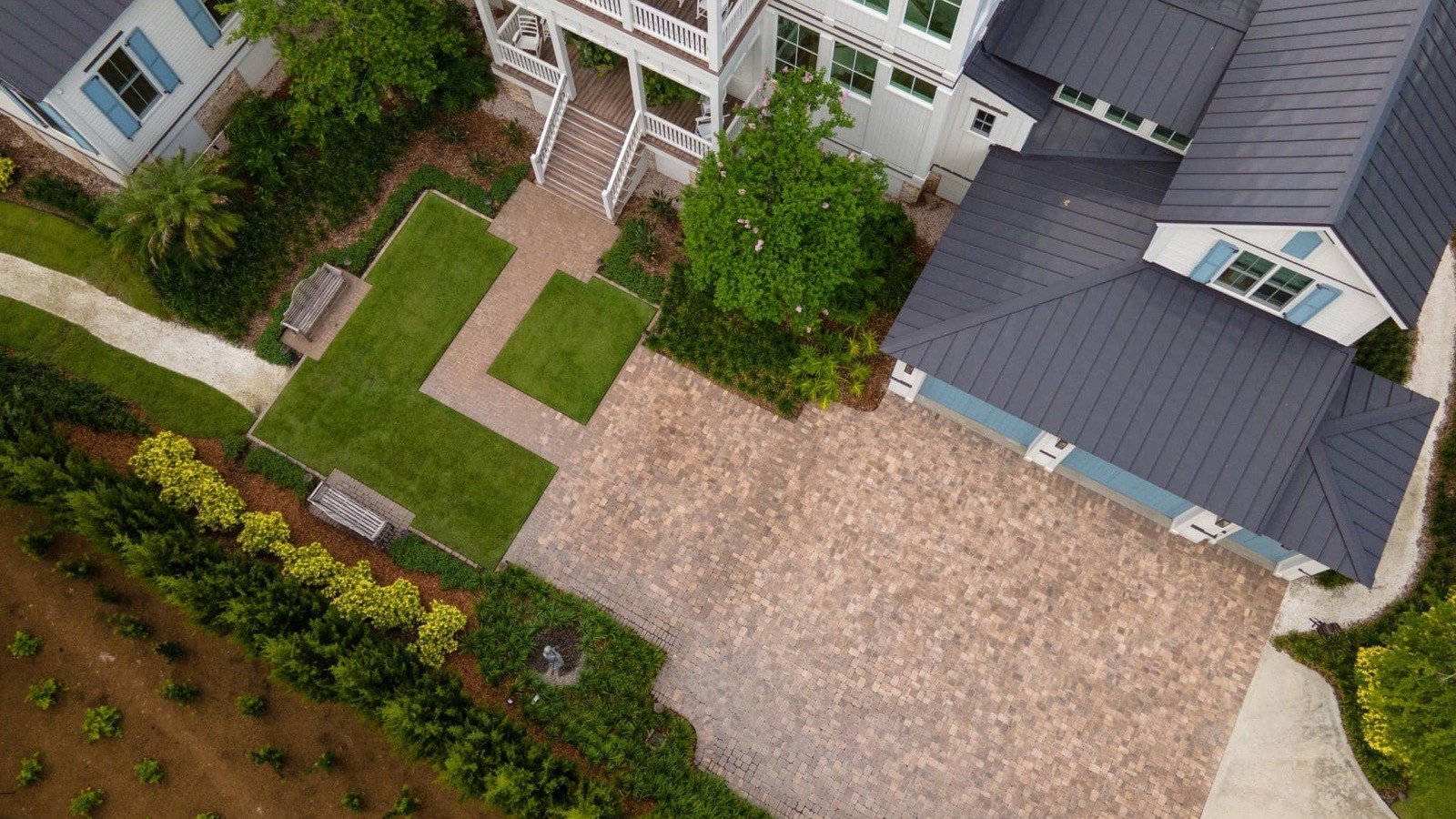
What changed for HOA architectural review on July 1, 2026?
House Bill 803 amended Section 720.3035 of the Florida Statutes, the section that governs architectural control in homeowners' associations. As summarized by the Florida Condo and HOA Law Blog, an association or its architectural review committee may not require a building permit to be issued as a prerequisite for review, and not having a permit when you apply is not a basis to deny the application. The association can grant a conditional approval that depends on you obtaining a permit later, when local law requires one.
For homeowners, this means the HOA review can start before the permit process instead of waiting on it.
What did the 2024 HOA law already require?
House Bill 1203, effective July 1, 2024, added protections that still apply. If an application is denied, the association must give written notice that cites the rule or covenant the denial is based on. Section 720.3045 also says an association cannot prohibit owners from installing items such as artificial turf, boats, flags, vegetable gardens, clotheslines and recreational vehicles when they are not visible from the parcel's frontage, an adjacent parcel, an adjacent common area or a community golf course, unless general law or a local ordinance prohibits them.
How do the 2024 and 2026 rules fit together?
| Rule | In effect since | What it means for your project |
|---|---|---|
| No permit required before HOA review (Section 720.3035, HB 803) | July 1, 2026 | You can apply to the HOA first. Approval may be conditioned on a later permit. |
| Written denial citing the rule (2024 amendments) | July 1, 2024 | A denial should tell you which rule or covenant it relies on. |
| Items not visible from frontage or neighbors, including artificial turf (Section 720.3045) | July 1, 2024 | Turf hidden from view cannot be banned by the HOA. |
| Local governments and synthetic turf (HB 683) | 2025 | Cities and counties cannot ban turf on some single family lots. HOA covenants still apply. |
Can an HOA ban artificial turf in Florida?
It depends on where the turf goes. Turf that is not visible from the street, neighbors, common areas or a community golf course is protected under Section 720.3045. A front yard that faces the street is not covered by that protection, so your community's covenants and architectural guidelines decide. Separately, a 2025 state law, House Bill 683, stops local governments from banning synthetic turf on some single family residential properties, according to UF/IFAS. That law is about cities and counties, not private HOA covenants. If you are weighing turf against real grass, see artificial turf vs sod in Florida.
Do paver projects need HOA approval?
Florida law does not list pavers one way or the other. Your declaration and the architectural guidelines do. In many deed restricted communities, a new driveway, walkway, patio or pool deck that changes what the street sees goes through the architectural review committee, and some communities publish approved paver colors and patterns. Read your documents before you sign a contract, so the design you choose is one the committee can approve.
What should a paver application include?
- A site sketch or survey showing the area, dimensions and distance to property lines
- The paver product, color and pattern, plus any border or banding color
- Photos of the current driveway, walkway or patio
- Notes on drainage, such as where water goes and whether the slope changes
- The contractor's name and contact information
- Whether a city or county permit will be pulled, and by whom
A complete package avoids back and forth with the committee. For colors that work in the Florida sun, see how to choose paver colors. Lifetime Pavers works with Tremron paver lines, and the product name and color are details you can ask for in writing for your application.
Do you still need a city or county permit?
Yes, when local rules require one. House Bill 803 changes the order of the HOA review, not the permit rules. Whether a paver project needs a permit depends on the city or county and on the scope of work, as we explain in do you need a permit for pavers in Florida. Driveway work in a public right-of-way often has its own process, and Cape Coral is a good example, covered in Cape Coral driveway permits for pavers.
Lifetime Pavers is a paver installation company based in Cape Coral, Florida, installing paver driveways, walkways, patios and pool decks, plus turf and sod, across Southwest Florida. Request a free estimate or call (239) 297-0277.
Sources
- Florida Condo and HOA Law Blog: The HOA architectural control statute has again been amended (July 28, 2026)
- Florida Statutes, Section 720.3045 (Florida Senate)
- UF/IFAS: Considering synthetic turf? What homeowners should know (July 15, 2025)
Frequently asked questions
Can my HOA require a permit before reviewing my paver application?
Does my HOA have to explain why it denied my application?
Can a Florida HOA ban artificial turf?
Does House Bill 803 mean I do not need a permit?
Do I need HOA approval to change my paver color?
How long does HOA approval take in Florida?
What should I send my HOA for a paver project?
Who can help with paver details for an HOA application in Fort Myers?
Get a free estimate in Southwest Florida
Tell us about your driveway, walkway, patio or pool deck. Lifetime Pavers serves Fort Myers, Cape Coral, Naples, Bonita Springs, Estero and Marco Island. Call (239) 297-0277.
Get My Free Estimate